When learning becomes play
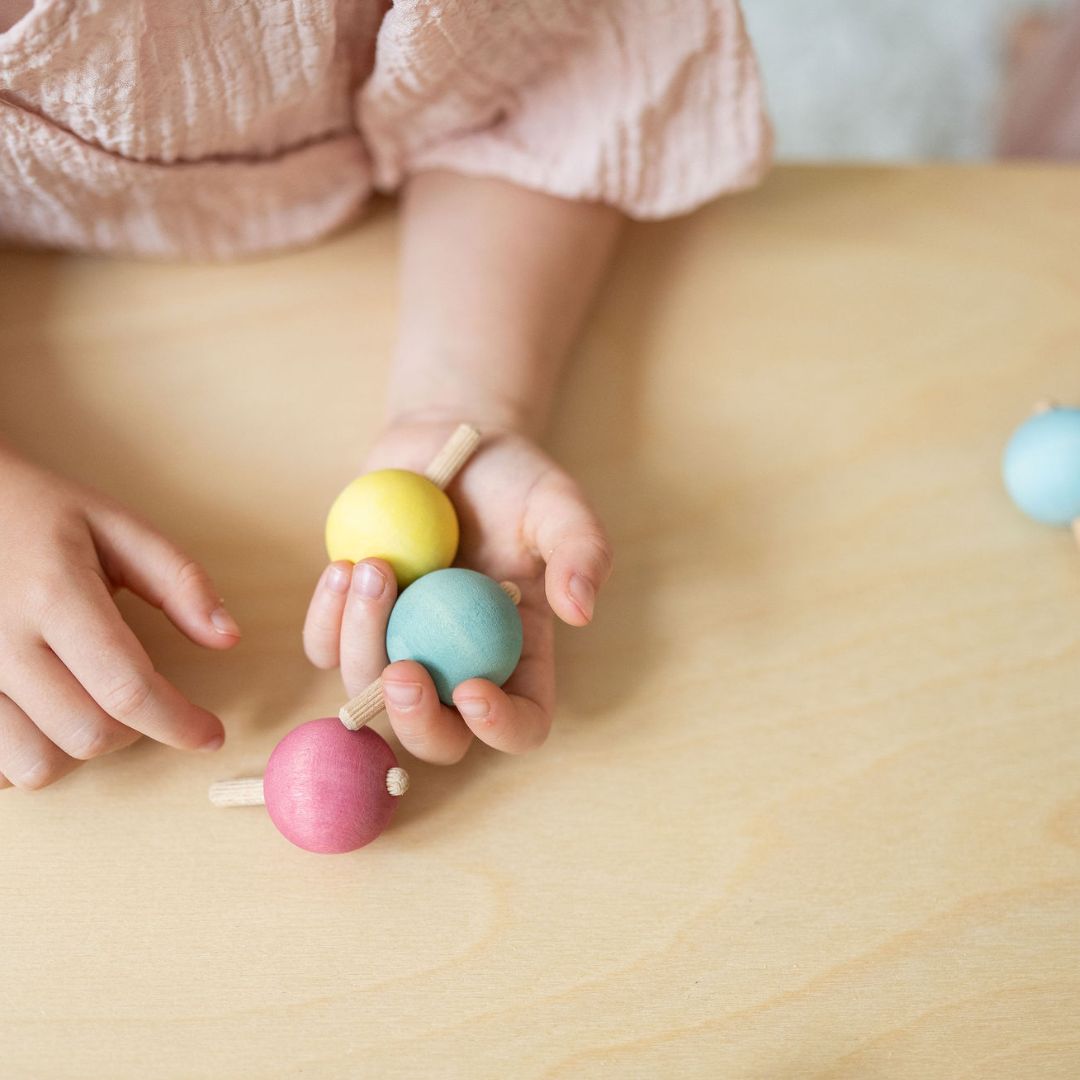
Children want to discover things for themselves. They want to touch, move, compare and try things out. That's why many things are easier when learning is not just explained, but can be experienced.
A letter suddenly becomes exciting when you can hold it in your hand. Numbers become more understandable when they become visible and tangible. And patterns often reveal themselves quite naturally when children are allowed to play freely with them.
Children learn with their whole body:
- They observe carefully
- They feel differences
- They sort and compare
- They keep trying new things
And sometimes the most important learning experiences happen in these small moments of play.
Discovering numbers with Zahlenland
Mathematics often becomes particularly enjoyable when children are allowed to recognize connections for themselves.
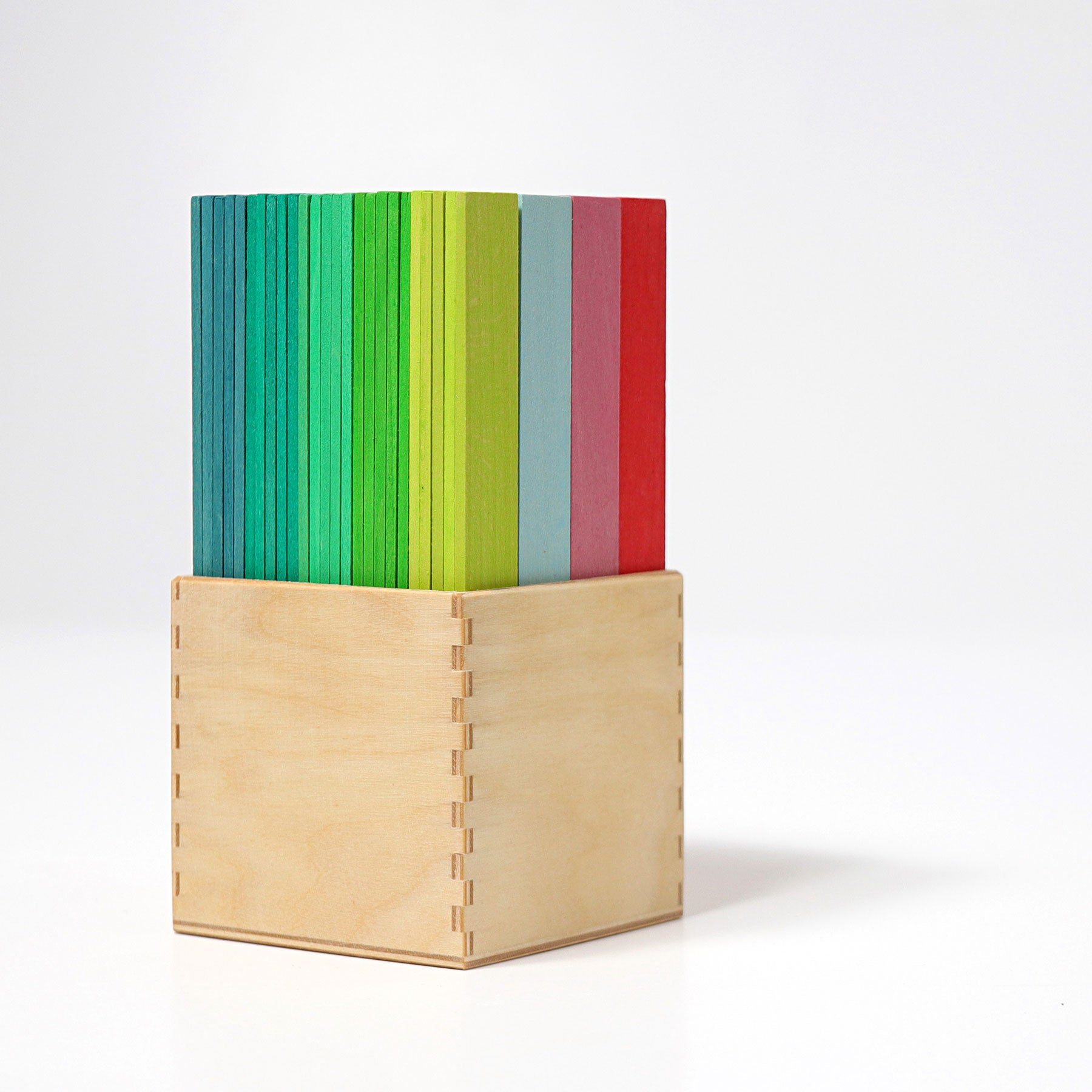
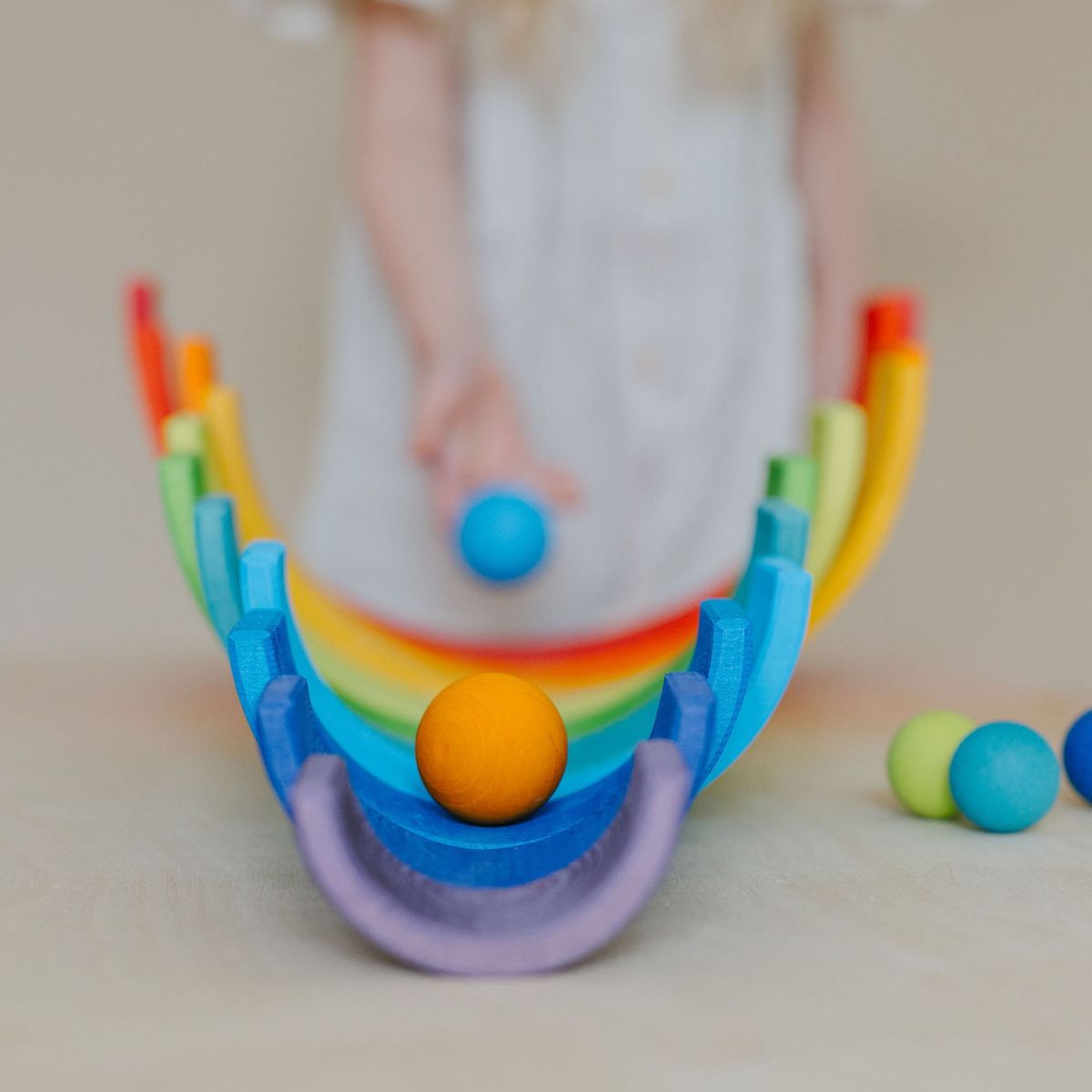
In GRIMM'S Zahlenland, children encounter numbers through colors, shapes, and sizes. The large blue rainbow arch, for example, represents the number 10.


The other materials also pick up on the same color-number logic. This way, children encounter certain numbers again and again in the same color and gradually become familiar with them.

This creates the first mathematical experiences in a playful way:
- Comparing quantities
- Arranging sequences
- Assigning colors
- Recognizing patterns
- Trying out first calculations
And often this happens in the middle of free play.
The rainbow may initially be simply stacked or built. Later, children discover that the colors belong together, that sequences are formed, or that quantities can be compared.
This is exactly what makes playful learning so special:
Children discover connections themselves and often develop a natural understanding of numbers.

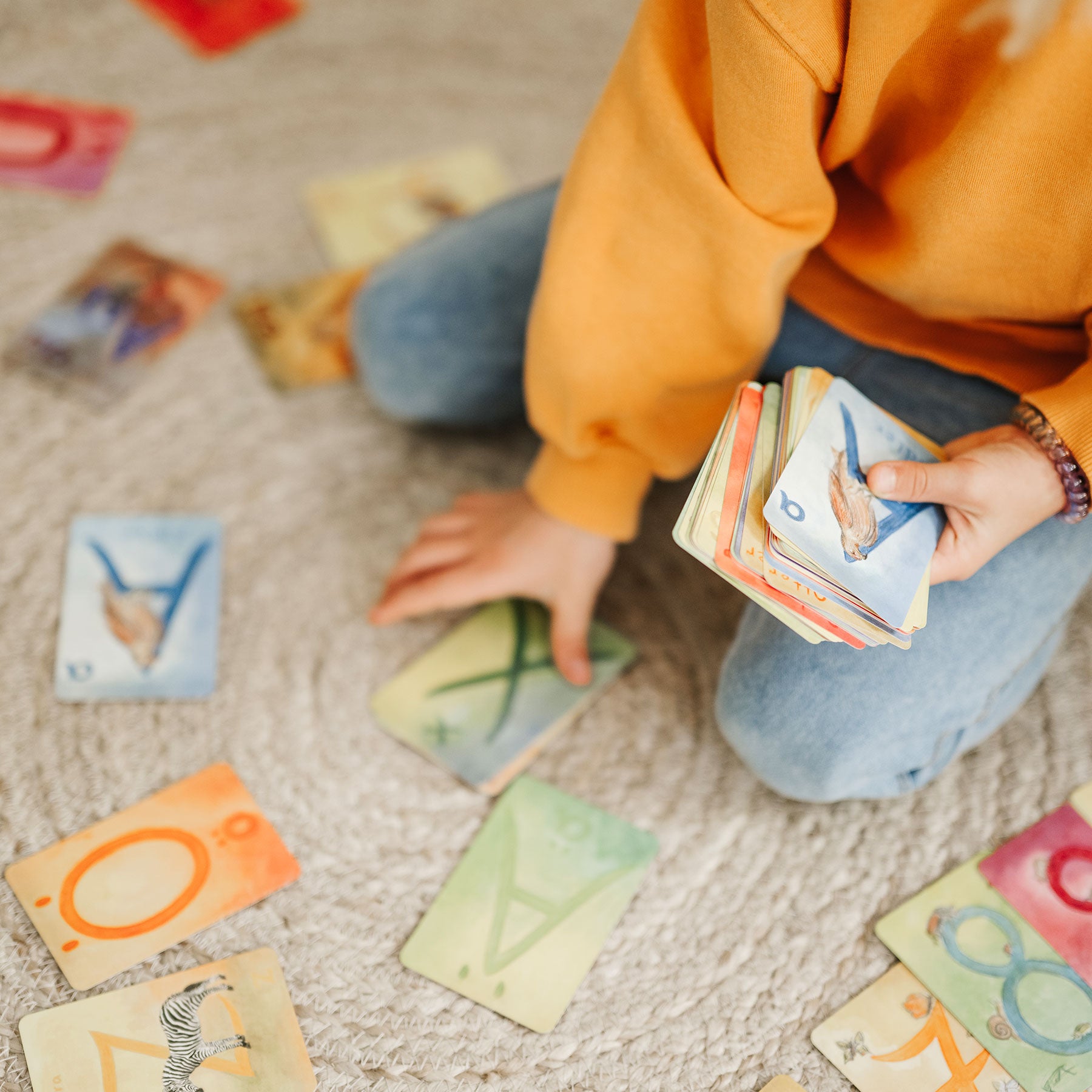
Letters to touch
Language also becomes much more tangible for children when letters don't just exist on paper.
Wooden letters invite you to:
- Spell names
- Form first words
- Compare letter shapes
- Discover sounds playfully
Many children start with the letters of their own name. Others look for objects that begin with a certain sound or spell out small everyday words.
What's particularly nice is that there's no pressure to perform. Letters are allowed to simply be interesting first.


Learning happens through doing
Children often learn most sustainably when they are allowed to experience things themselves.
A number is not simply memorized, but built, arranged, and discovered.
A letter is not just read, but held and moved.
A pattern first emerges playfully and is later understood.
And that's where something very valuable lies:
Children are allowed to find their own approach.
Discovering the world with curiosity
Perhaps learning at the beginning isn't about being able to read or do arithmetic as quickly as possible. Rather, it's about developing a joy of discovery.
Because curious children learn all by themselves. They ask questions, try things out and want to understand how things are connected.
And sometimes this learning begins with something very simple:
a colorful rainbow, a number in their favorite color, or a wooden letter in small children's hands.